Other Tests
Immune system, cortisol, blood values, heavy metals, hormones, amino acids, telomeres, genes and EEG since 2018.
Updated: October 2026
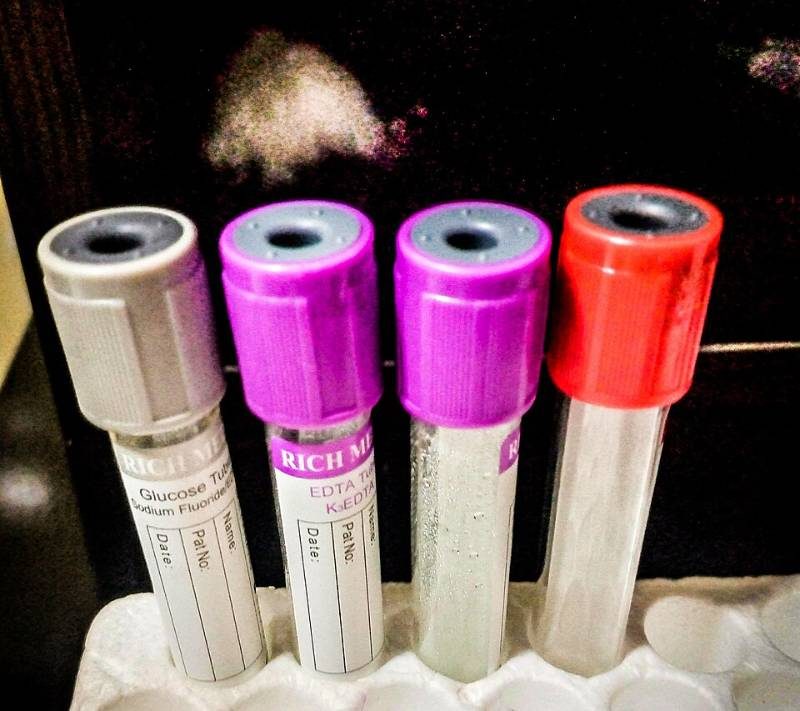

Besides the neurological reports, I regularly have other values measured so I can adjust my supplements in a targeted way and spot possible burdens on my body. I describe my target blood values under Supplements.
Immune System, Mast Cells and Stress: My Values 2025 and 2026
Since October 2025, Dr. Michael Guschlbauer, a general practitioner in Mannheim, has been following me with detailed lab tests. I do not publish the reports themselves because they contain personal data. Here are the most important results.
Nerve damage marker. Neurofilament light chain (NfL) shows how much nerve tissue is currently being broken down. In April 2026 my value was 9.6 pg/ml, with the limit at 20.8. NSE and S100, two further markers of nerve cell damage, were also normal in October 2025. To me this is a good sign that fits my stable course.
Mast cells. Leukotrienes in my urine were elevated in April 2026 (611 pg/mg creatinine, normal below 385). Tryptase was normal at 5.1 µg/l. Elevated leukotrienes occur with activated mast cells and allergies. This fits the suspicion of mast cell activation syndrome (MCAS), which we are looking into further.
Immune system. After stimulation, my T helper cells produce too little interferon gamma (34 pg/ml, normal 118 to 543). This is the part of the immune defense that fights viruses and infected cells (TH1). IL-17 and IL-10 were also low. White blood cells were slightly below normal in October 2025 (3.6 per nl) and just within the range again in April 2026 (4.3).
From June to August 2026, the IMD laboratory in Berlin tested 15 herbal and immune-boosting products on my blood cells. Only berberine stimulated the TH1 defence. Many others, for example Biobran, enoki and curcumin products, mainly raised IL-10, which is the braking side of the immune system. To be honest: this is a test tube test. Whether it predicts what a product does in the body has not been proven scientifically.
Stress and cortisol. In September 2026 I had a saliva cortisol day profile and a urine neurostress profile done. The morning value was elevated (28.6 nmol/l, normal 5.5 to 19.3), midday and evening were normal, and the daily rhythm is intact. The morning value was already slightly above normal in August 2025. DHEA was normal in the morning and somewhat low in the evening. Serotonin, adrenaline, noradrenaline and the balance of GABA and glutamate were normal, as was dopamine in the urine. However, that says nothing about dopamine in the brain. A high morning value is typical of ongoing stress. For me it is a reminder to pay as much attention to recovery and sleep as to training.
Regeneration. The number of stem cells in my blood rose from 200 per ml (October 2025) to 500 per ml (April 2026). The lab gives a target of over 1,000. The growth factor BDNF, which is important for connections between nerve cells, was clearly too low (3.2 ng/ml, normal 14 to 32). Endurance exercise, fasting and social contact are considered ways to raise BDNF.
Heavy metals, inflammation and fatty acids. Mercury was slightly elevated in both measurements (3.5 µg/l, normal below 2). That is why I had a small amalgam filling and a gold crown removed. Arsenic was slightly elevated in October 2025 and normal again in April 2026. CRP and all measured inflammatory messengers were normal. My omega-3 index was 12.6 and 10.3 percent, which is in the very good range.
Blood Values
- Blood values Dr. Guschlbauer, October 22, 2025 (German)
- Lithium level, October 7, 2025 (German)
- Blood values, July 25, 2025 (German)
- Blood values up to January 4, 2023 (German)
- Blood count, hormones, allergies, September 30, 2021 (German)
Heavy Metals and Micronutrients
- Heavy metals and micronutrients, October 8, 2025 (German)
- Heavy metal test, April 3, 2025 (German)
- Heavy metal test Plus, March 25, 2024 (German)
Amino Acids and Hormones
- Amino acids, March 12, 2025 (German)
- Amino acids, July 25, 2023 (German)
- Hormones, August 7, 2025 (German)
Telomeres and Genes
My genes. As early as 2021, the human genetics department in Tübingen found no hereditary form of Parkinson's. In 2025, Permedio calculated my polygenic risk for eleven common diseases, including heart disease, diabetes, colorectal cancer and Alzheimer's. None of them is elevated, and for Alzheimer's I am even in the lower range (14th percentile). In July 2026 I had my whole genome sequenced by tellmeGen. There, too, my genetic risk for Parkinson's is average. So my Parkinson's is not written in my genes. That makes it all the more likely that lifestyle and environment play a role, and that is exactly where I start.
- Telomeres, October 7, 2025 (slightly improved) (German)
- Telomeres, August 18, 2022 (German)
- Polygenic risk factors, May 20, 2025 (German)