Supplements
What I take every day, my target blood levels and selected supplements in detail.
Updated: October 2026
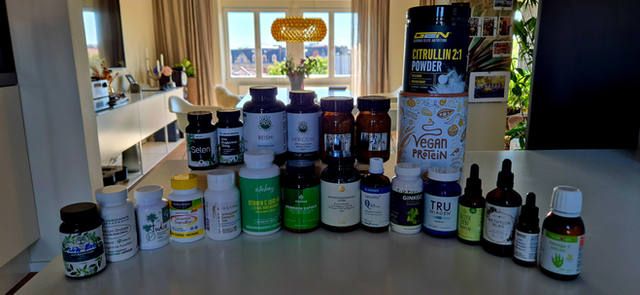
For most supplements, the evidence in Parkinson's comes only from lab and animal experiments or from small studies. There is not a single product with large studies that prove an effect on the course of the disease. High-dose coenzyme Q10 and creatine even showed no benefit in large Parkinson's studies. It does make sense, though, to correct real deficiencies, for example in vitamin D, vitamin B12 or omega-3. And even with vitamins you can take too much: in high doses, vitamin B6 can damage the nerves.
My most important advice: Have your blood levels checked and correct real deficiencies in a targeted way. And discuss everything with your doctor.
A large 2026 review confirms this: it analyzed 38 studies, and no supplement has been shown to halt Parkinson's. The most promising are probiotics, prebiotics and synbiotics, nicotinamide riboside, and omega-3 combined with vitamin E (Journal of Parkinson's Disease). For nicotinamide riboside this has not been confirmed: in the large Norwegian NOPARK trial with 410 patients it brought no benefit after one year, and scores were on average even slightly worse than with placebo (more under Research 2026). I had taken it for years, most recently 300 mg a day, and stopped in October 2026.
What I take every day
As of October 2026. A few other products that are tailored specifically to my own lab values are not listed here.
Basics
- Vitamin B complex active (Biogena): 1 capsule in the morning, Monday, Wednesday and Friday
- Vitamin C PLUS with quercetin (Neurolab): 2 capsules at midday
- Vitamin D3 liposomal (NatuGena): 1 drop (5,000 IU) every two days, depending on my blood level (my target: about 100 ng/ml)
- Vitamin E as Gamma E Mixed Tocopherols (Life Extension): 1 capsule at midday
- Vitamin K complex (Vitamaze): 1 capsule in the evening, Monday, Wednesday and Friday
- Omega-3 from fish oil (Vitality UltraPure, on the recommendation of Dr. Guschlbauer): at midday with a fatty meal, each capsule with 400 mg EPA and 300 mg DHA (previously omega-3 from algae by Norsan)
- Magnesium-Komplex 7 (Sunday Natural): 1 capsule in the morning
- MagEnhance (Intelligent Labs): 3 capsules before bed, with 1,000 mg magnesium L-threonate plus magnesium glycinate and magnesium taurate
- Coenzyme Q10 as ubiquinol (Solavica): 1 capsule at midday, Monday, Wednesday and Friday
- Alpha-lipoic acid: around 300 mg a day, in phases
- Creatine (tablets): 5 grams a day, 2 grams in the morning, 2 grams at midday and 1 gram in the evening
- Lithium (lithium orotate, Vitamatic): 20 mg elemental lithium before bed
- TUDCA (Omnymune): 1,000 mg at midday, Tuesday, Thursday and Saturday
- Urolithin A (Mitopure by Timeline): 500 mg in the morning on an empty stomach (since spring 2026)
- N-acetyl-L-leucine: 2.5 grams in the morning on an empty stomach, more on this under Tanganil
- Curcumin: Longvida (Igennus) and CurcuPro with resveratrol and quercetin (Neurolab), 1 capsule each at midday
- SerenePro (Neurolab): 1 capsule in the evening, a blend including 5-HTP, B vitamins, taurine and L-theanine
- L-theanine (Swisse): 200 mg before bed
- Sunflower lecithin (NOW Foods): 1,200 mg in the evening
For longevity
- Spermidine (Vitabay): 6 mg at midday
- Pomegranate extract: 1 capsule at midday
- Resveratrol as Optimized Resveratrol with quercetin, fisetin and pterostilbene (Life Extension): 1 capsule in the evening
- Taurine: 2 grams in the evening
- Glucosamine and chondroitin (natural elements): 1 capsule in the evening
Only at times
- Ashwagandha
- Methylene blue
Vitamin D3, omega-3 and lithium are especially important to me. I keep taking coenzyme Q10 and creatine despite the disappointing Parkinson's studies, because they matter for the energy of the cells and for the muscles.
A 2025 analysis of eight studies found that vitamin D does not improve mobility in Parkinson's overall. Only the distance walked in six minutes was somewhat longer (Frontiers in Nutrition). I take it anyway to avoid a deficiency.
A lab study from 2024 found that TUDCA, coenzyme Q10 and creatine together protected nerve cells better than each one alone (Frontiers in Neuroscience). This has not been tested in humans. In Parkinson's, TUDCA has not yet been tested in humans. The related bile acid UDCA proved safe in a small 2023 study with 30 patients, more under UDCA. In ALS, TUDCA brought no benefit in a large study in 2024.
New on magnesium L-threonate (2026): In a placebo study with 100 adults aged 18 to 45 with poor sleep, 2 g of magnesium L-threonate a day slightly improved thinking performance and reaction time after six weeks. Measured sleep did not change (Frontiers in Nutrition). I take 1 g a day. It has not been studied in Parkinson's.
My target blood levels
These values serve as a guide for me. They come from my own research and are in part stricter than the usual lab limits. Please discuss your own target levels with your doctor.
- Vitamin D3: Many doctors and labs consider 40 to 60 ng/ml (100 to 150 nmol/l) to be good. In my view, about 100 ng/ml (250 nmol/l) is better, so that is the level I aim for, agreed with my doctor. Vitamin D poisoning usually only occurs at levels above 150 ng/ml (375 nmol/l). Anyone aiming this high should have vitamin D and calcium in the blood checked regularly.
- Lithium: 25 to 350 µg/l in whole blood.
- Omega-3 index: above 8 percent. The ratio of omega-6 to omega-3 between 1:1 and 2.5:1. My value was clearly too low at first and is in the target range after the adjustment.
- Magnesium: have it measured in whole blood, which tells you more than serum.
- Selenium: Too much selenium can damage the nerves. The European Food Safety Authority has set the upper limit for adults at 255 µg a day, including food. My neurologist specifically pointed this out to me. If you take selenium, you should have your level checked regularly.
Which magnesium?
- Magnesium oxide: hardly absorbed, usually a cheap filler. Not recommended.
- Magnesium citrate: quickly and readily available to the body, good for muscle cramps, mildly laxative.
- Magnesium glycinate: good for sleep and inner calm, not laxative, so good for the evening.
- Magnesium taurate: good for the heart and nerves.
- Magnesium L-threonate: gets into the brain especially well.
A combination of citrate and glycinate often makes sense.
How long does what stay in the body?
The body stores some supplements, while others are broken down within a few hours. That determines what you need to take regularly and what you can top up. The bars show roughly how long a relevant blood level or store remains after the last dose. The time axis is logarithmic, otherwise hours and years would not fit into one picture.
- Orange, no storage: broken down within hours to a few days, for example lithium, urolithin A, curcumin or alpha-lipoic acid. They only work if taken regularly. Lithium has a half-life of about 20 to 24 hours, and a steady level is reached after about five days.
- Yellow, stored for weeks: for example creatine, coenzyme Q10, vitamin C, vitamin K2 and magnesium. A few days off do no harm. Creatine is back to baseline about 30 days after stopping.
- Green, can be topped up: vitamin D3, omega-3, vitamin E and vitamin B12. The vitamin D blood value has a half-life of about two to three weeks (Nutrients), so taking it every other day is equivalent to taking it daily. The omega-3 index lasts about three months, and the liver holds enough vitamin B12 for several years. Here it is worth checking a blood value before changing the dose. For vitamin D I aim for about 100 ng/ml, see My target blood levels above.
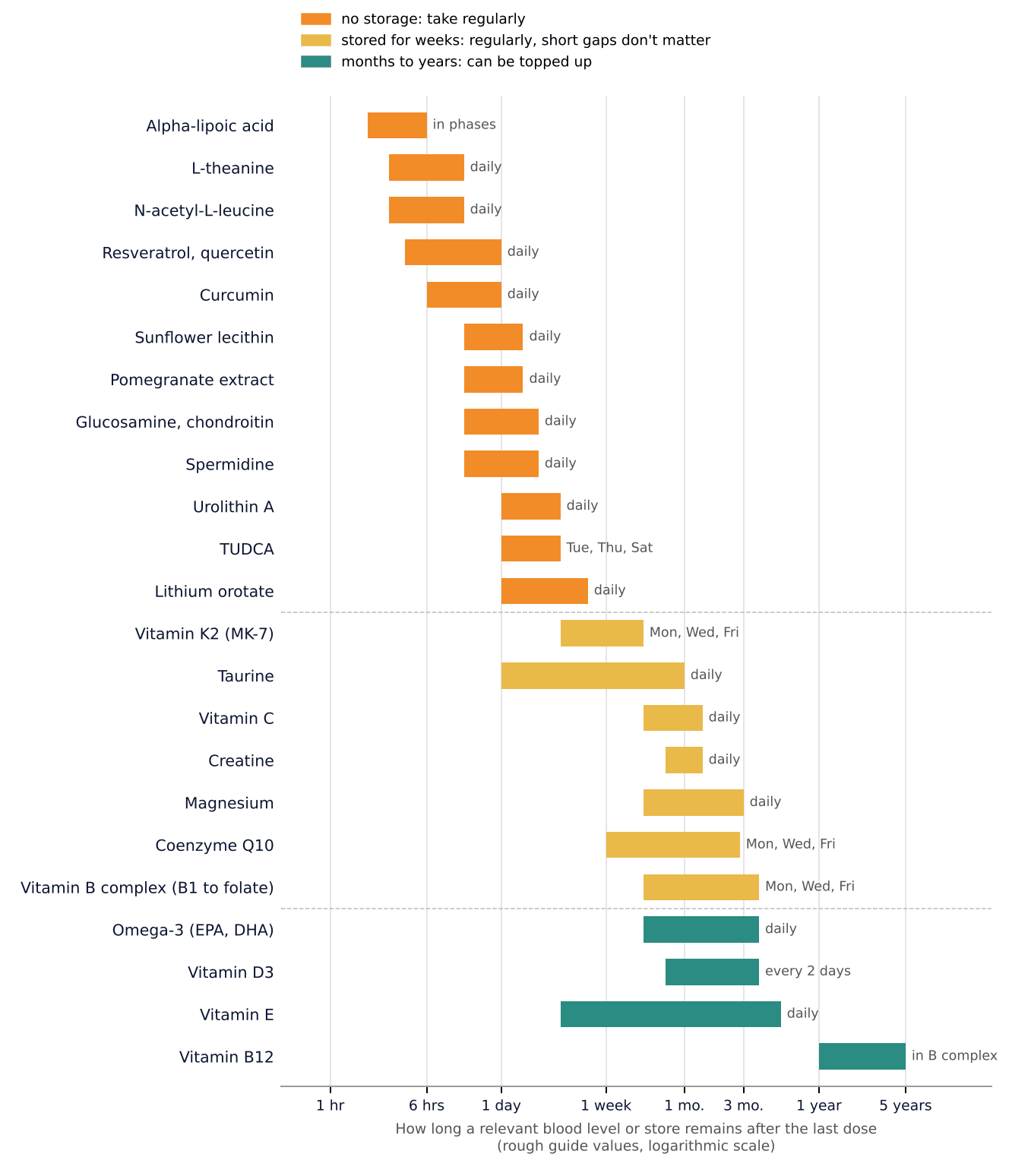
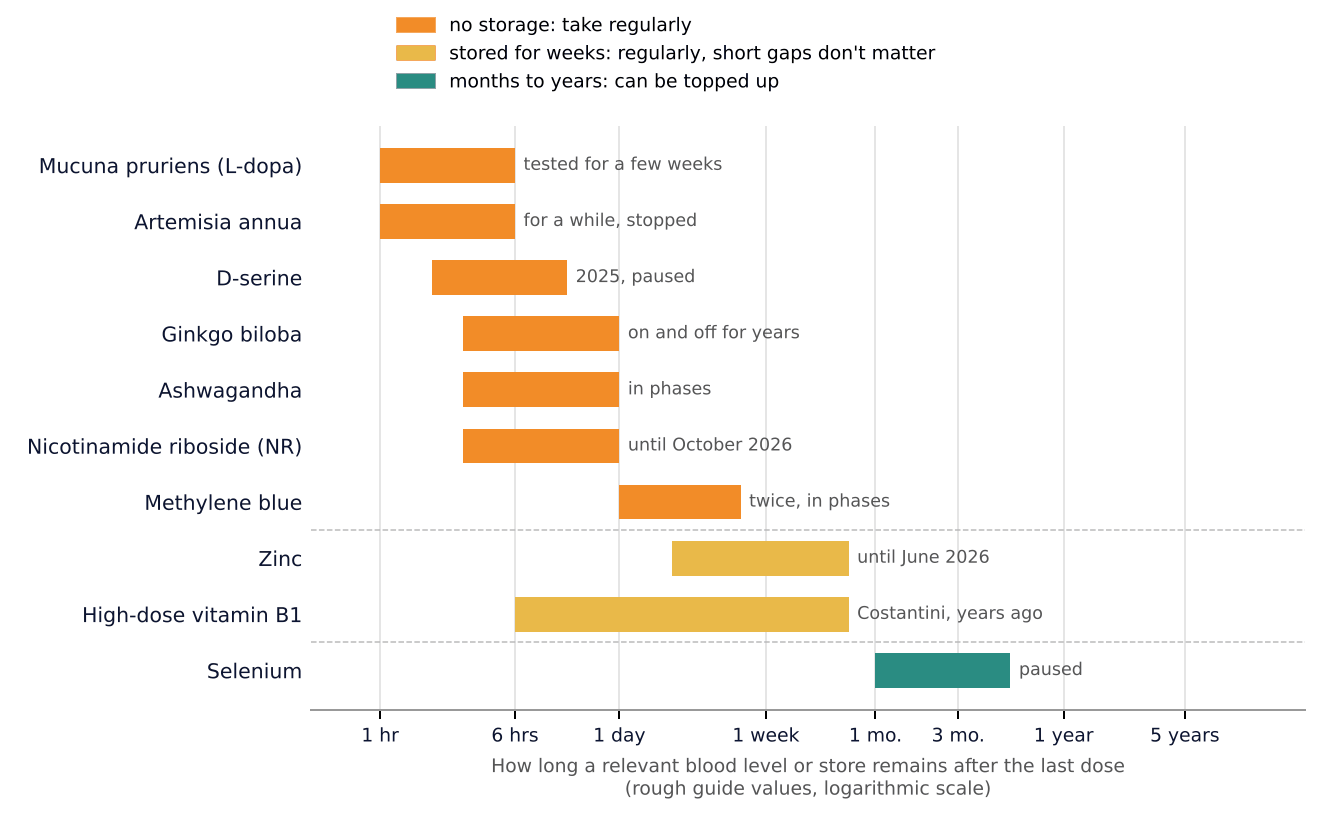
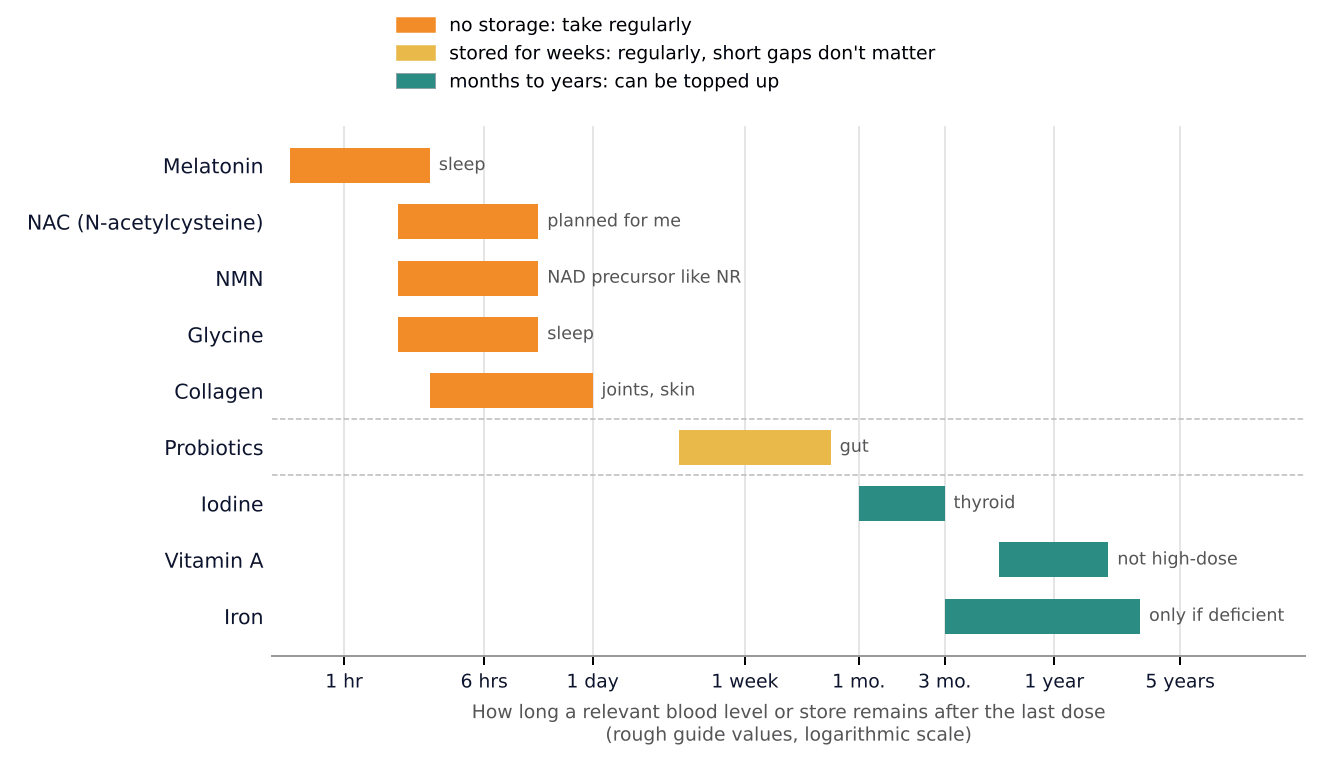
Blood level and effect are not the same thing, and all values are rough guide values that vary from person to person. Some of them, for example for zinc, selenium, iodine and the short-acting substances, are general values from pharmacology and have not been checked individually against a study. Please discuss any change of dose or rhythm with your doctor first.
Download: How long does what stay in the body? All three timelines with explanations and sources (PDF, German)
Videos on this topic
Effort and costs
The costs depend a lot on how much you take and can add up to several hundred euros a year. In Germany, health insurers only pay when a deficiency has been proven.
Selected supplements in detail
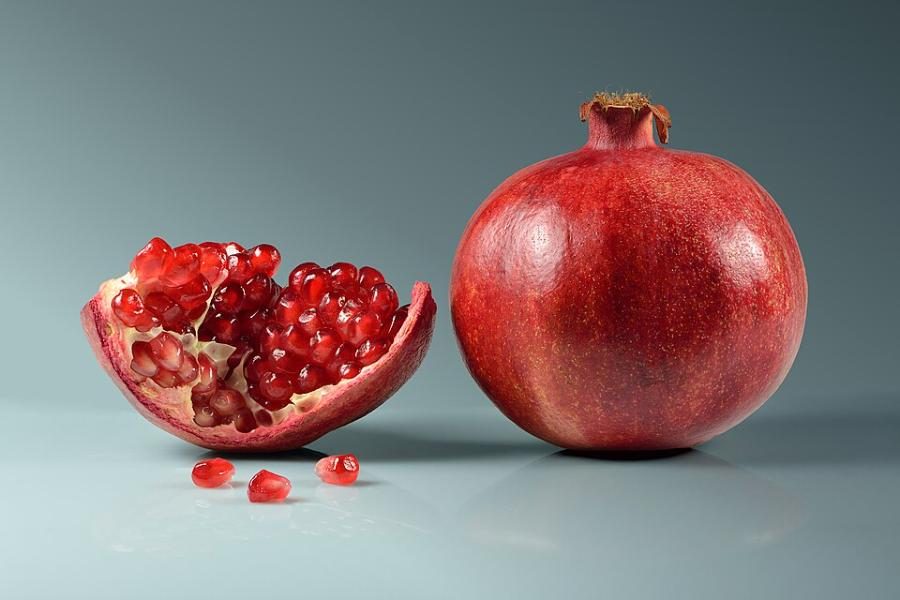 Urolithin AStimulates the self-cleaning of the cells' power plants. I have been taking it since the spring of 2026.
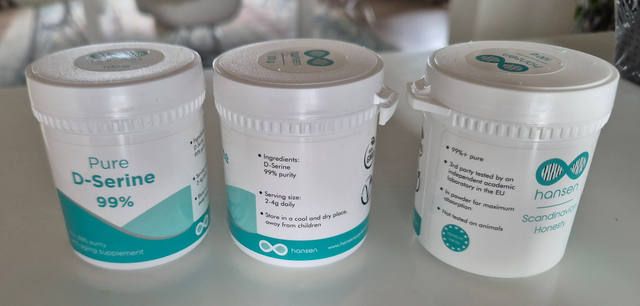 D-SerineAn amino acid that improved mobility and mood in a small study. For me, only temporarily.
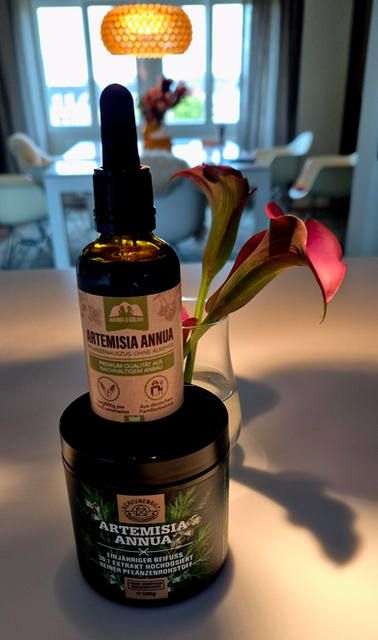 Artemisia annuaSweet wormwood, the source of the malaria drug artemisinin. Studied in Parkinson's only in animals. I no longer take it.
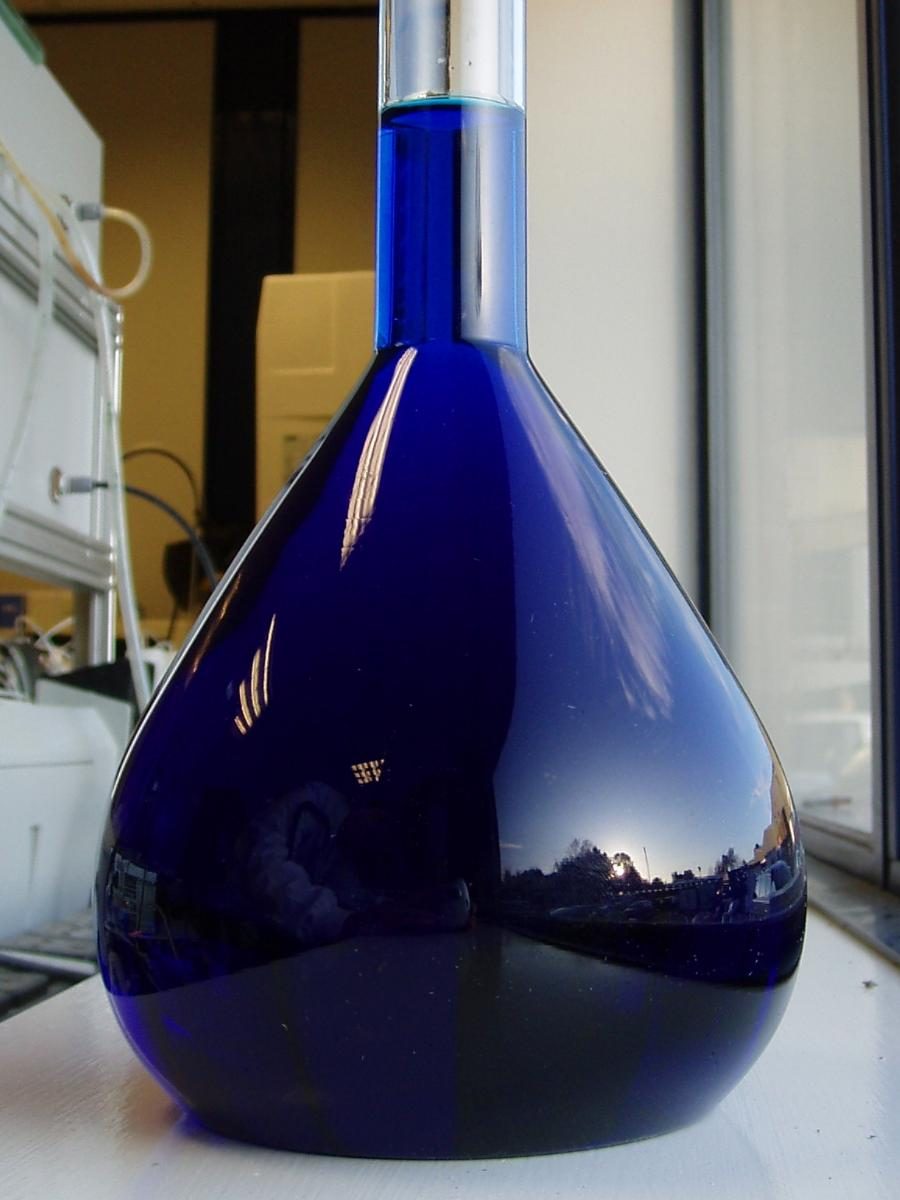 Methylene BlueAn old dye that is said to support the mitochondria. I only take it at times.
 Mucuna pruriensThe velvet bean naturally contains L-dopa. Not a harmless supplement, but a remedy for later.
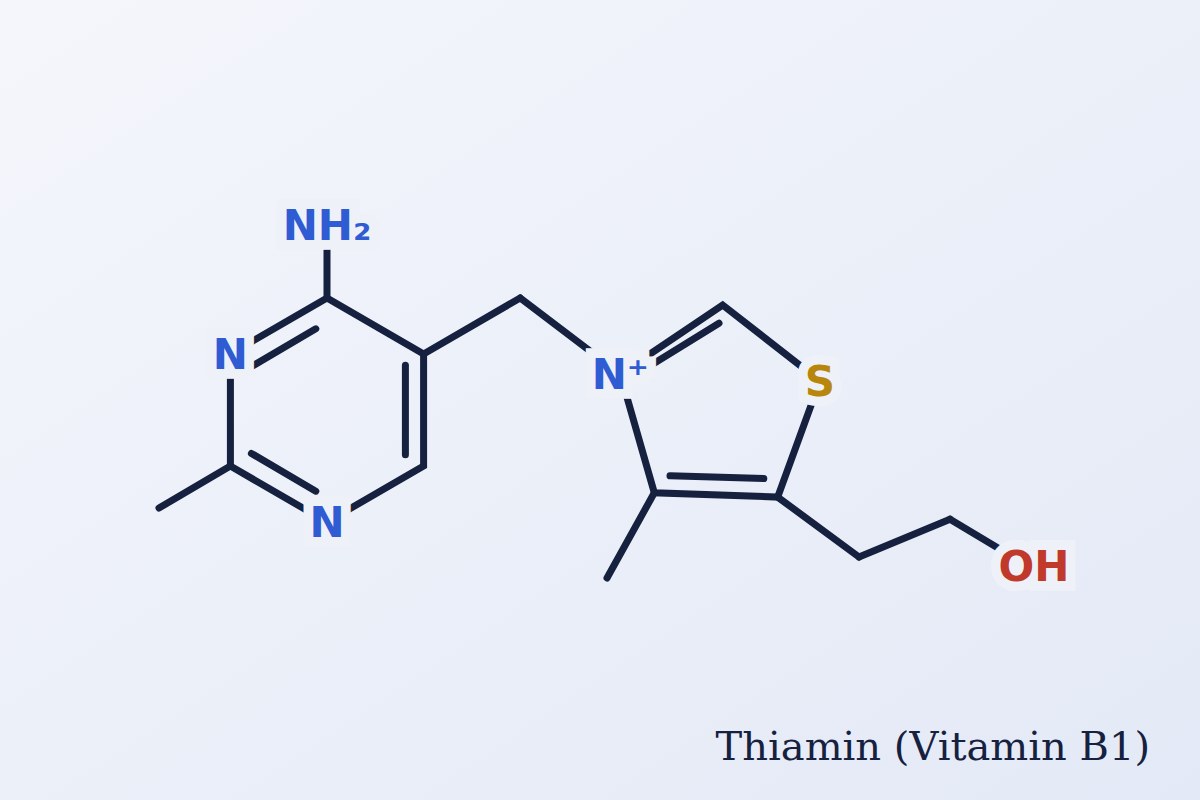 High-dose vitamin B1Dr. Costantini's protocol: many positive reports, but no placebo-controlled study yet.
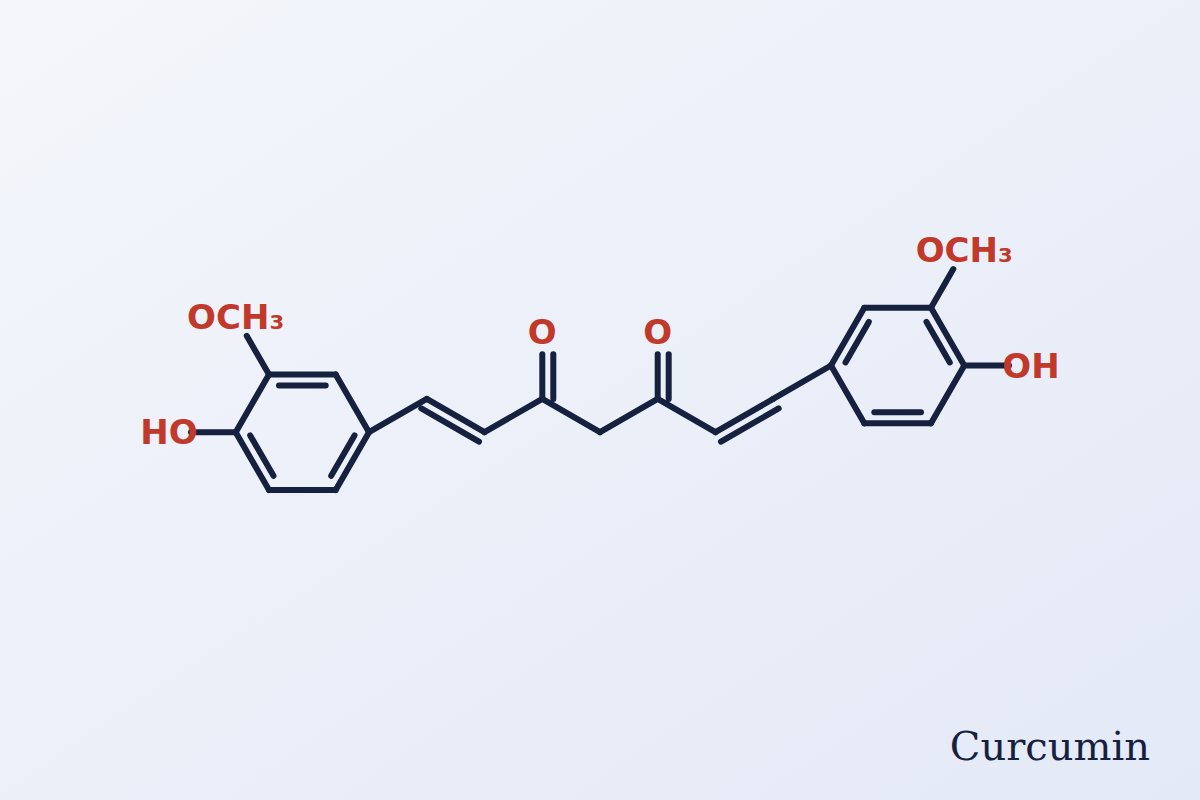 Theracurmin and LongvidaThe active ingredient of turmeric in forms the body can actually absorb.
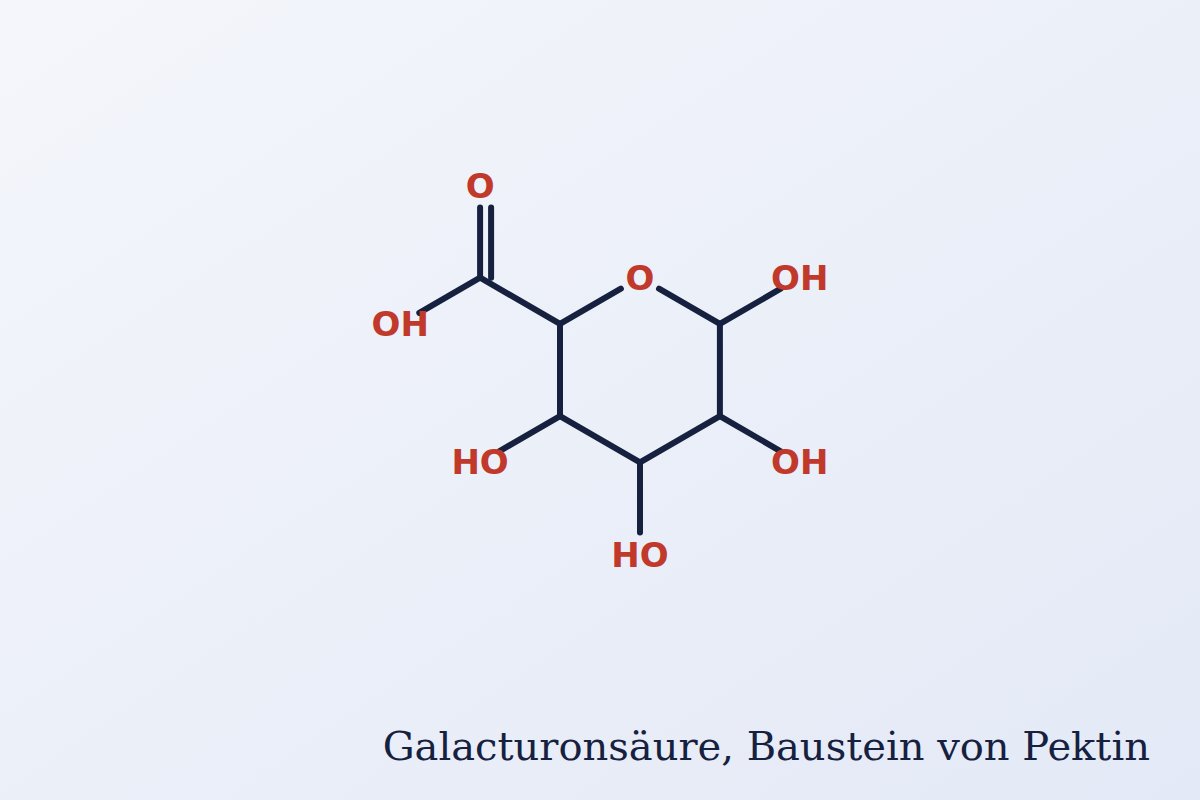 PectasolModified citrus pectin that slows down an inflammatory protein.
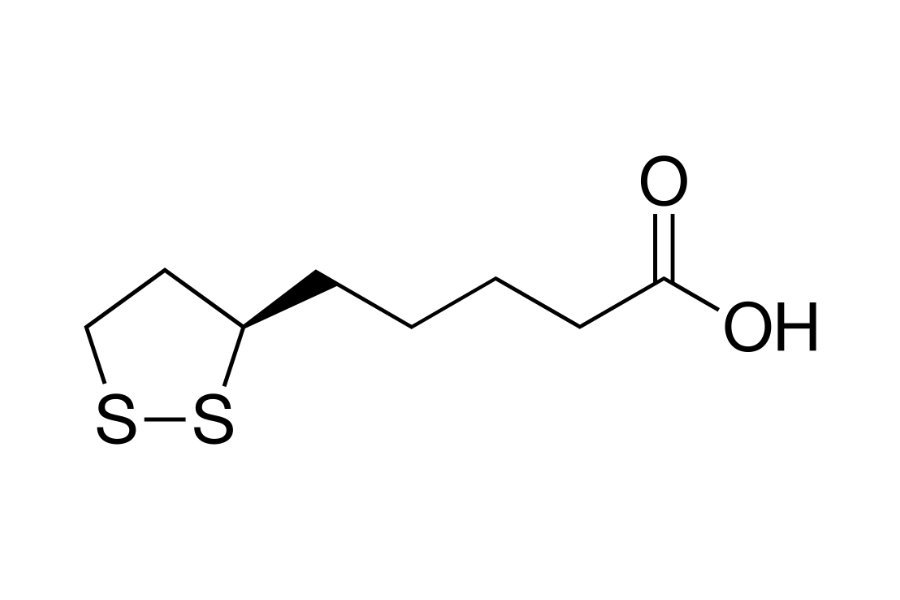 Alpha-Lipoic AcidAn antioxidant made by the body itself for the cells' power plants. I have taken it on and off for years, currently around 300 mg a day.
 Ginkgo BilobaThe special extract from ginkgo leaves showed first signs of benefit in Parkinson's in 2026. I have taken ginkgo on and off for years.
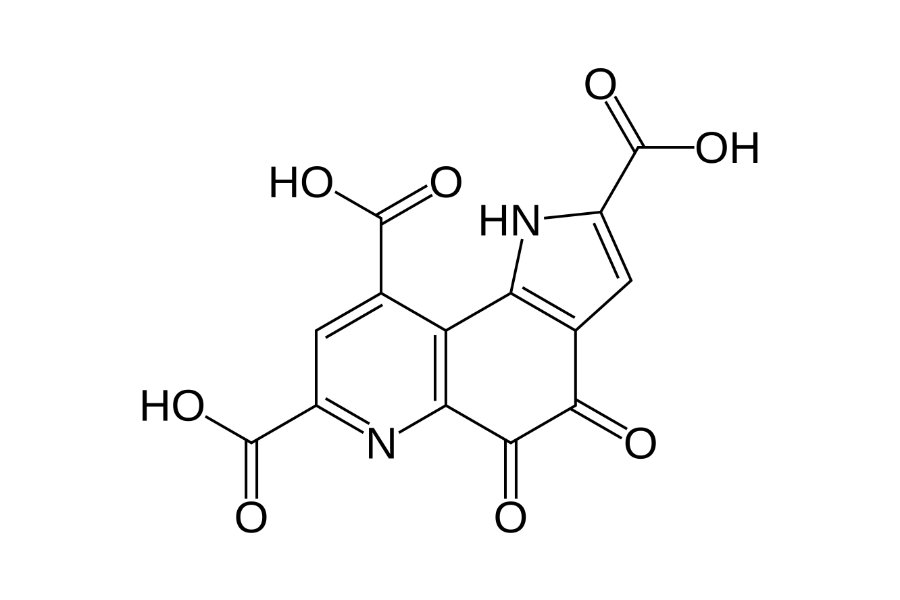 PQQ (Pyrroloquinoline Quinone)Said to strengthen the cells' power plants and stimulate the formation of new mitochondria. In Parkinson's, so far only studied in animals.
 St. John's WortA proven herbal remedy for mild depression. In Parkinson's, it protected nerve cells in animal studies, but it has serious interactions.