Alpha-Lipoic Acid
An antioxidant made by the body itself for the cells' power plants. I have taken it on and off for years, currently around 300 mg a day.
Updated: October 2026
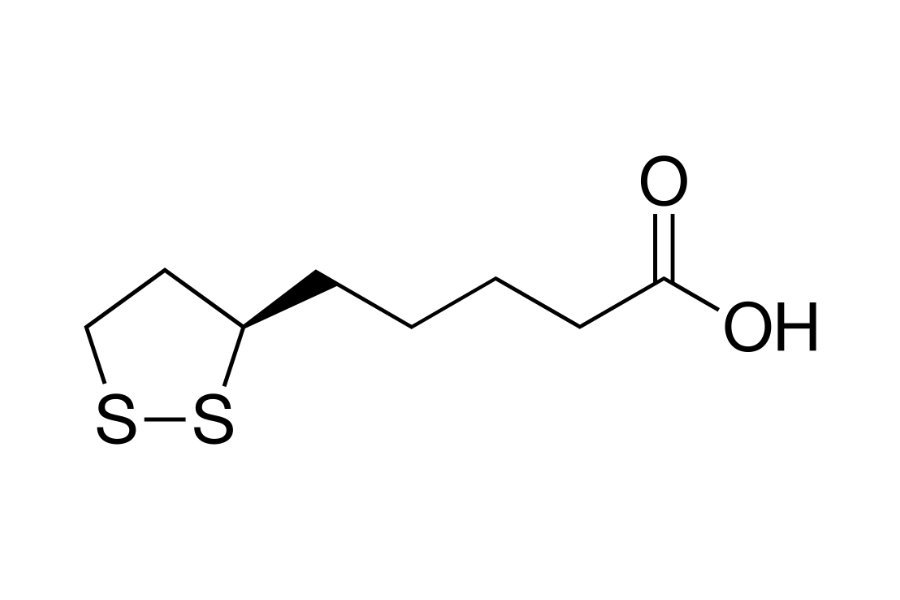

What is it?
Alpha-lipoic acid, also called thioctic acid, is made by the body itself in small amounts. It helps the mitochondria obtain energy from food and is a strong antioxidant that works in both watery and fatty surroundings.
In Germany, alpha-lipoic acid is approved as a medicine for nerve damage in diabetes, usually at 600 mg a day. As a supplement, it comes in the usual mixed form and in the R form, which the body makes itself. There is no evidence that the R form works better in humans.
What does the research say?
- Animal study, April 2025: In mice and nerve cells damaged with the nerve poison 6-OHDA, alpha-lipoic acid slowed an inflammatory complex in the brain (the NLRP3 inflammasome) and with it an inflammatory form of cell death called pyroptosis. This is controlled via the protein S100A9. The mice's Parkinson's symptoms improved and the dopamine nerve cells were better preserved (International Immunopharmacology).
- Animal study, October 2025: In mice given the nerve poison MPTP, alpha-lipoic acid prevented ferroptosis, a cell death triggered by iron, in the dopamine nerve cells. The animals' movement and memory improved. The protection worked via the Nrf2 pathway, which controls the body's own defense against oxidative stress (Neuroscience Letters).
- Animal study, March 2026: In rats with rotenone damage, sodium R-lipoate, a particularly stable form of R-lipoic acid, and the plant compound isoquercitrin eased inflammation in the brain and the movement problems. Dopamine levels rose again (Neurochemical Research).
- Other laboratory studies: Earlier work in Parkinson's models already showed less oxidative stress, better mitochondrial function and fewer abnormal iron deposits with alpha-lipoic acid. Cell experiments from 2026 confirm the protection of nerve cells.
- Humans: There are no studies in Parkinson's patients so far, and none is registered at ClinicalTrials.gov (as of October 2026).
Side effects and caution
Nausea, heartburn and headaches are possible. Alpha-lipoic acid can lower blood sugar, so caution is needed with diabetes medication. Very rarely it triggers an autoimmune reaction against the body's own insulin, with severe low blood sugar. This mainly affects people with a certain genetic trait that is more common in East Asia. It is best absorbed on an empty stomach.
My experience
I have been taking alpha-lipoic acid on and off for several years, with long breaks in between. For a few months now I have been taking around 300 mg a day again. I have not noticed any effect so far. Then again, protection of nerve cells would not be something you could feel directly.
My conclusion
The laboratory results on inflammation, iron and mitochondria are encouraging. In people with Parkinson's, however, an effect has not been proven. For me, alpha-lipoic acid remains a well-known building block that I take in phases.